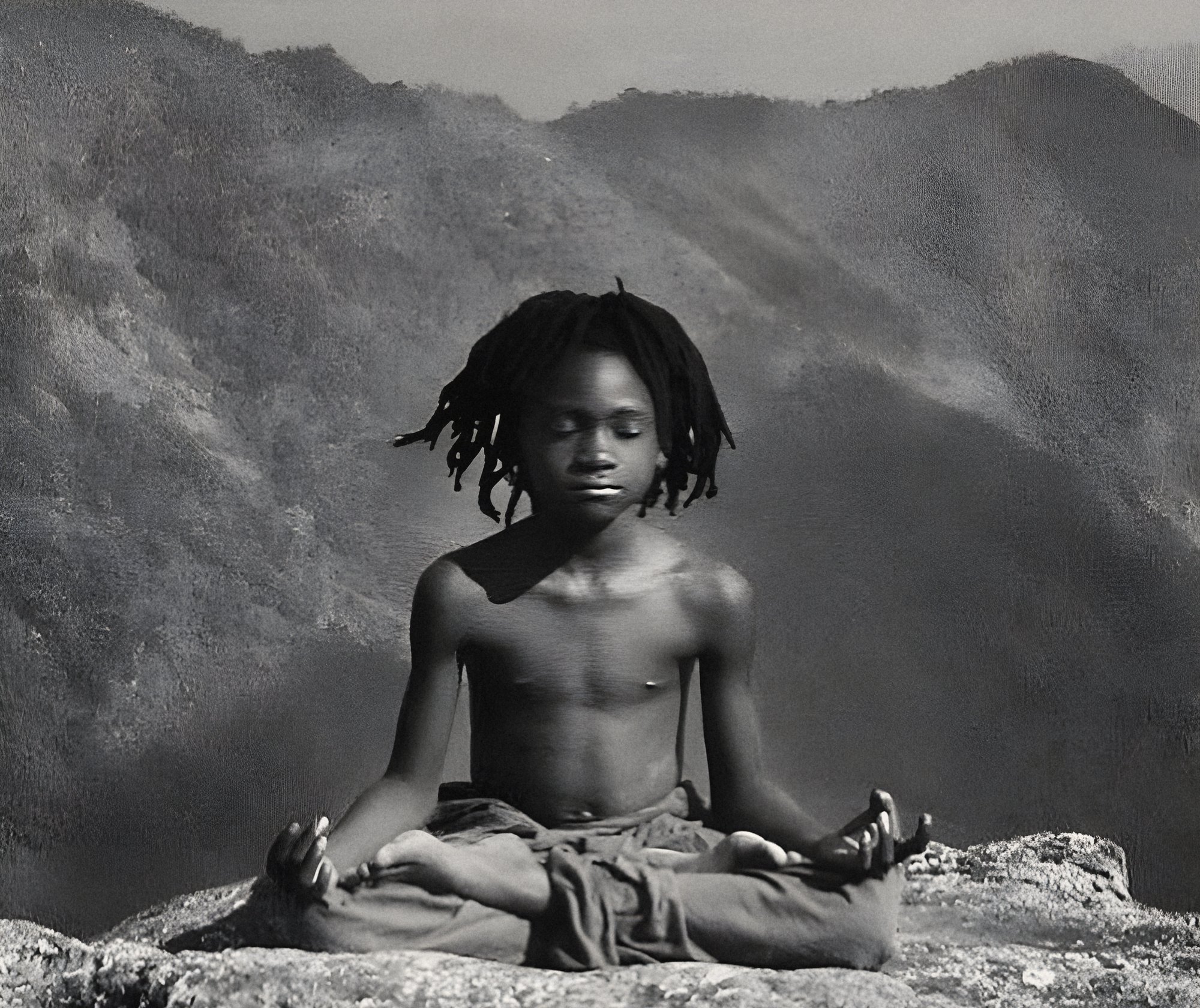
Discipline The Mind
Intro
Our minds love to wander. Neuroscientists call this the "default network," that background voice that runs on autopilot.
Disciplining our mind unlocks more focus on what matters to you, and creates an awareness gap so you can control thoughts and feelings instead of unconsciously react to them.
Mindfulness builds both through two styles. Single-point training channels one's attention on one thing (breath, sound, sensation) to sharpen focus, while contemplative practice widens the awareness gap by watching thoughts drift past without judgment.
In this exercise, you'll learn the principles for each style and be equipped to practice disciplining your mind regardless where you are.
Instructions
Practice both styles of mindfulness to train your mind.
- Set a 1 min timer to focus on one thing, then reflect.Possible things: breath, background sound, feeling of your feet on the floor. After, reflect below on how you feel.
- Set a 1 min timer to let your mind wander, then reflect.Focus on staying still and simply letting your mind run freely. After, reflect below on what thoughts came up.
- How might a disciplined mind support you in life?Share any benefits that come to mind, such as "Sharper in my projects," "Calmer in conflicts," "More creative ideas."
- What time works best to fit in a few mindful minutes?Research shows 8 min of mindfulness for 2 weeks leads to changes in one's neural circuity that is visible in brain scans.
Try this tool on Telos.

